


Table of Contents (6 sections)
Why 'Negative' Does Not Mean 'Allergy-Free'
Having a patch test done before a lash appointment offers understandable peace of mind. However, a full appointment introduces dozens of fresh glue bonds, extended exposure time, and concentrated chemical fumes settling near the eye for hours. These substantial differences explain why someone can tolerate a five-lash trial and still develop eyelid swelling after a full set.
Beauty forum discussions frequently document clients who sailed through a salon trial test only to experience acute puffiness after their full set. A single anecdote does not provide statistical data, but it clearly illustrates why a salon test must never be framed as an ironclad guarantee.
Three Tests That Are Frequently Confused
| Method | What It Demonstrates | Critical Limitation |
|---|---|---|
| Applying 5–10 sample extensions | Tolerance to a specific studio setup under minimal exposure | Dose and vapor concentration are much smaller than a full set |
| Dabbing glue onto the inner arm or behind the ear | Direct cutaneous skin tolerance to cured adhesive | Does not replicate sensitive eyelid tissues or airborne fumes |
| Dermatological epicutaneous patch testing | Standardized allergen series evaluated by medical doctors | Requires medical referral, specific scheduling, and interpretation |
Dermatological resources from DermNet explain that acrylate contact allergies are formally diagnosed using standardized epicutaneous test series. Experts strongly warn against applying undiluted cosmetic adhesive monomers directly onto skin at home, as this can trigger new allergic sensitization.
What Should Be Documented Before a Salon Patch Test
- Exact adhesive brand and batch code.
- Testing method used (sample extensions on outer corners vs skin contact).
- Date and time of testing alongside planned date for the full appointment.
- History of prior reactions to lash glues, gel nail polishes, medical adhesives, or acrylates.
- Action protocol if itching, redness, eyelid swelling, or respiratory symptoms occur.
A test is only as good as its interpretation. 'No adverse symptoms observed after 48 hours' is an honest observation. 'You are completely immune to allergic reactions' is an unsubstantiated claim that no salon test can support.
Myths vs Facts in Lash Allergy Testing
Myth: 'If the first two hours are calm, I am completely safe.'
Fact: Type IV allergic contact dermatitis is a delayed-type hypersensitivity reaction that typically emerges 24 to 72 hours after chemical exposure. Mechanical irritation or dry eyes can also take hours to manifest.
Myth: 'Having worn lashes years ago guarantees I will never react.'
Fact: Sensitization develops through repeated exposure over time. Prior tolerance is helpful historical context, but our immune systems can develop sensitivities at any point.
Myth: 'Every red eye is proof of an acrylate allergy.'
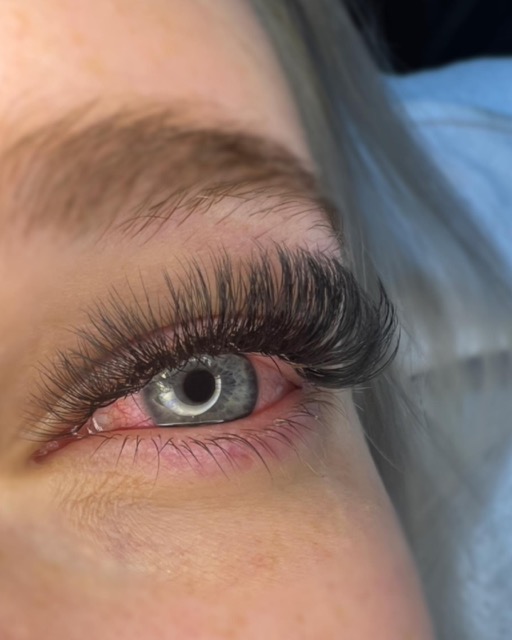
Fact: Adhesive fumes, dry eye syndrome, rubbing eye pads, or mechanical scratches can produce identical redness. EyeWiki lists multiple potential ocular complications; an accurate diagnosis requires professional clinical examination.
Myth: 'Switching glue brands automatically solves prior reactions.'
Fact: Products labeled sensitive or hypoallergenic still rely on cyanoacrylate chemistry. A new brand name rarely helps if your immune system has sensitized to the base monomer.
Warning Signs After a Test or Full Set
Stop all cosmetic treatments and seek medical attention if redness or itching intensifies, eyelids become puffy or tender, or pain develops. Vision changes, extreme light sensitivity, or breathing difficulties are medical emergencies that must never be monitored at home.
- Do not try to rip extensions off your eyelids or apply home oil remedies.
- Photograph the progression in daylight without delaying medical care.
- Contact the salon for the specific adhesive brand and safety data sheet.
- Share all product details with your healthcare provider.
Frequently Asked Questions
How long before a full set should a patch test be done?
At least 48 to 72 hours before your full appointment. This allows sufficient time for delayed-type allergic reactions to appear.
Can someone be allergic only to black lash glue?
Yes, some individuals react to carbon black pigment. However, clear adhesives still contain cyanoacrylate monomers. Switching to clear glue without medical guidance does not rule out chemical reactions.
Can I ever wear extensions again after an allergic reaction?
If you have developed a confirmed acrylate allergy, continuing to wear extensions carries high risk. Consult a dermatologist before considering any future exposure.
Does tearing during an appointment mean I have an allergy?
Not necessarily. Tearing is often a reflex to chemical vapors or an unsealed eye pad. Persistent swelling, itching, and redness that linger hours later are more indicative of allergic responses.
Updated: August 2026. Medical note: This guide provides cosmetic information and does not replace dermatological or ophthalmological evaluation.
Sources and notes (3)
All facts and recommendations were verified using official guidelines and scientific sources.