


Table of Contents (6 sections)
Understanding What a Model Call Really Means
A post reading 'lash model needed' can refer to very different scenarios: a complete beginner practicing basic isolation under direct supervision, an experienced artist refining an advanced technique, or a studio filming content for social media. The word model alone does not tell you what to expect.
A personal account on Reddit highlights how easily misunderstandings arise: the participant assumed a model session meant showcasing a finished artistic look and had not expected a training exercise. Her story reflects an individual experience, but it shows why clear communication matters.
Who Treats You and How Is the Session Supervised?
Ask about the student's training stage and the exact supervision setup. Hearing 'a trainer is present' could mean the instructor stays right beside the bed, oversees several students simultaneously, or only checks in at the end. Ask for the real structure of the session.
Make sure you have clear answers to these core questions:
- Who performs the actual application on your eyes?
- Who assesses whether your natural lashes are suitable for the planned exercise?
- Who checks the isolation and steps in to make necessary adjustments?
- Who is your contact person if you have questions or concerns after leaving?
A discounted model fee or a complimentary treatment never makes these basic safety questions any less important.
A Learning Goal Is Not a Promised Full Set
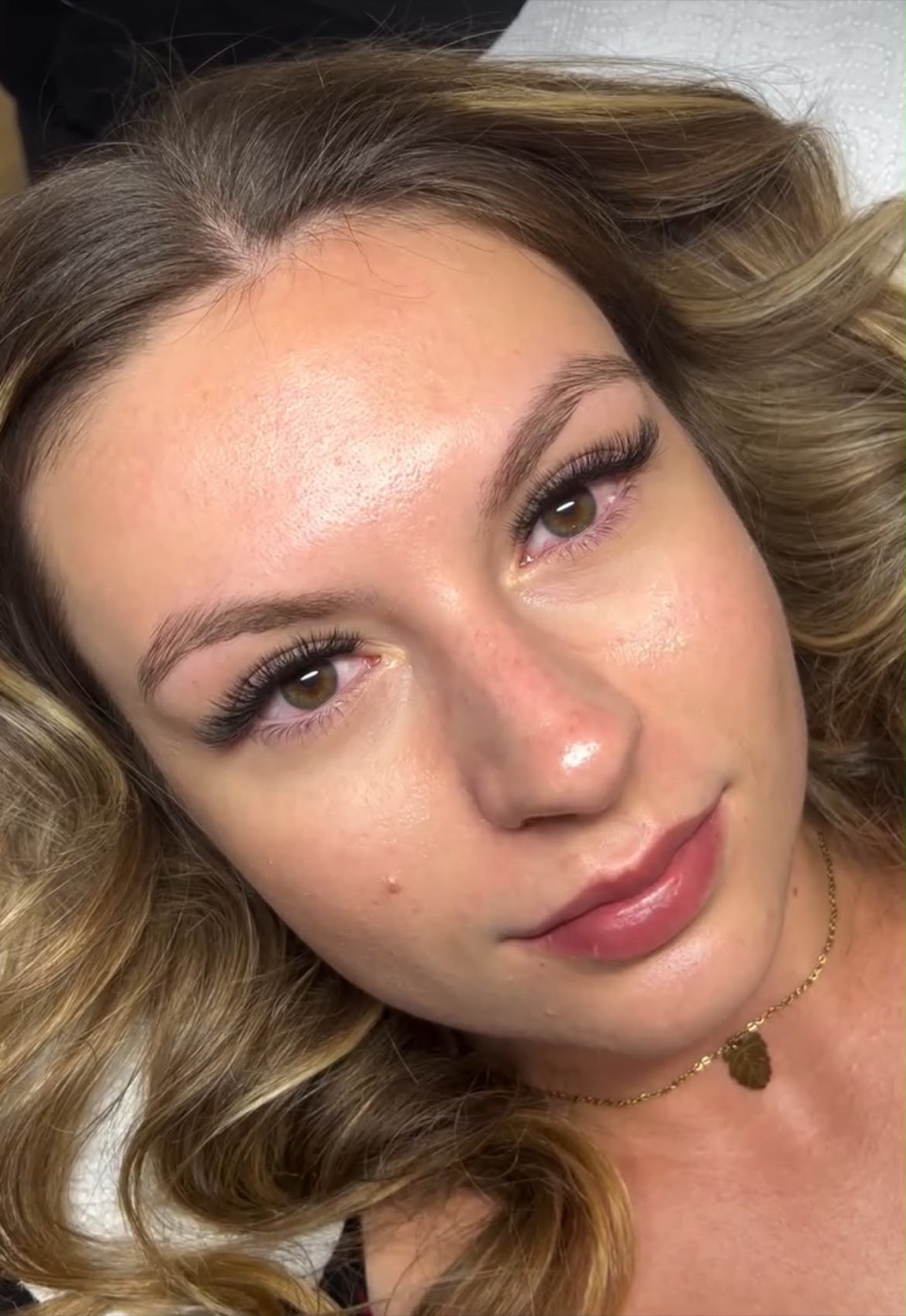
A training session might focus strictly on isolating challenging lashes, practicing inner corners, or testing fan geometry. Because of that, clarify whether both eyes will be fully finished and what the set will look like when you leave the studio.
If only a partial area or one eye is scheduled for the exercise, ask explicitly what follows. Will the trainer complete the set, balance both sides, or safely remove the extensions? Who handles that step, and does it involve extra costs? Knowing this in advance helps you decide if the session works for you.
Reference photos also need context: is the picture a binding target look or merely an illustrative reference for the student's lesson? An identical replica cannot be promised from a reference photo during a training session.
Planning the Entire Time Commitment
Ask for a realistic time window including consultation, training demonstrations, and the final trainer check. Training sessions involve explanations, corrections, and pauses. Let the studio know beforehand if you have a strict departure time.
If an exercise is likely to take longer than you can reliably stay still, the session is not a good match. Clarifying this ahead of time prevents stress for both you and the student.
Discussing Photo and Video Consent Separately
Ask whether photos and videos are strictly for internal assessment and feedback or will be published on the studio website and social media. Clarify whether images show only the eye area or your full face, and whether your name will be tagged.
Treatment consent and image consent should always be handled as separate agreements. If you do not want your images posted publicly, state that before confirming. The studio can then tell you whether the model slot still works without social media content.
What Happens During Discomfort and After the Appointment
Agree in advance on how to signal a pause. You never have to endure eye pain or pinching as part of someone's learning process. If you experience sharp pain, pronounced redness, or a scratching sensation, seek prompt medical advice; clinical overviews from EyeWiki describe these as signs of mechanical corneal irritation or chemical sensitivity.
Request written aftercare instructions, a clear contact person, and clarity on how follow-up corrections or removals are handled before agreeing. A low model price does not mean follow-up support disappears.
A good arrangement comes down to clarity: you know who is working on your eyes, what the final result will look like, and how much time you are committing. If any piece is missing, ask before you confirm.
Reference date: October 2026.
Is a lash model treatment completely free?
It depends on the academy or studio. Some sessions are free, while others charge a small fee to cover product costs. Clarify all costs before agreeing so there are no surprises.
How long does an appointment as a lash training model take?
Model appointments often take between two and a half to four hours. Trainees work more slowly while learning isolation and placement, and instructors pause to give feedback and make corrections.
What happens if a student cannot finish both eyes in time?
That should be clarified beforehand. The supervising trainer should complete the remaining lashes, balance both eyes, or schedule a prompt follow-up so you never leave the studio with an uneven set.
Sources & training references (2)
All facts and recommendations were verified using official guidelines and scientific sources.